Vi har arbetat mer med vår modell av Åmåls stationsbyggnad under juli. Fönsterbågarna har limmats fast och sedan har glasmaterialet lagts bakom dem. Vi satte sedan ihop basen och satte ihop de fyra sidorna (stående på basen) hålls ihop med ett elastiskt band! Vi bestämde oss då för att lägga till en liten detalj som inte ingår i satsen, och med hjälp av 0,5 mm mässingsstång har vi nu en målad ledstång vid stegen.
Vi besökte LennaKatten (Uppsala Lenna Järnväg) för att ha en trevlig dag ute och forska i signaleringen där, speciellt den gamla ställverket vid Lenna, som har varit föremål för en kort bruksanvisning. Men det lämnade oss med fler frågor än svar. Vi hade även ett bra och lärorikt samtal med en signalkille på järnvägen. De flesta av våra frågor är nu besvarade, men några finns kvar. Vi skulle vilja återskapa detta på vår eventuella nya layout, därav det extra intresset.
Vi har skaffat en annan dressin; inte ännu en ‘modifierad Volvo’ utan en specialbyggd MDR 125. Det är en statisk hartsmodell (och kan inte fås att fungera), men den kommer att se bra ut bara parkerad i ett sidospår någonstans! En av de vanligaste servicefordonstyperna genom tiderna är MDR (MDR = Motordressinen). Många hundra dressiner tillverkades från 1920-talet fram till 1960-talet. Dressinerna användes för bland annat persontransporter och inspektioner, men även ambulanstransporter på Malmbanan. Många har senare skrotats, men en del används än idag. De har dock i allt större utsträckning ersatts av dual-mode-fordon (bilar som kan användas på både väg och järnväg) som har fler användningsområden. Vår, nummer 3245, är från satsen MDR 125, nr. 3244-3309, med fyra dörrar, byggda av Bergbolagen Lindesberg 1956. De gick på bensin, och var även kända som ’köttbullar’ eller ’ärtor’ beroende på vem man frågar!
Andra intressanta nyheter
Vi har nyligen införskaffat en bok från 1979 om servicevagnar med UIC-nummer. Av den har vi lärt oss att UIC-bokstäverna för servicefordon inte följer samma regler som de flesta andra vagnar. Till exempel betyder ett “a” som andra tecken inte att fordonet är monterat på boggier. Även om detta förklarar hur vår ‘Qab’ bara kan ha två axlar (och ‘Qbd’ är på boggier), har det väckt en fråga om vår ‘Qab’, en Heljan-modell. Enligt boken gällde ‘Qab’ en typ av plog som aldrig faktiskt användes (en tilldelad kod). Tidigare FV1 skåpbilar visas som en typ ‘Qae’ (Q5) Impregneringsverk, senare Ogräsbekämpningsvagn, ‘Qgb’, lagervagn, ‘Qgg’, släpvagn, ‘Qlh-h’, städvagn (“-h” med torkning rum), och så fortsätter det. Det finns en nummerlista och vår vagn 945 4 229 ska vara en ‘Qgb’ fram till slutet av 1976, då den byggdes om till typ ‘Hvös’. Det var en före detta FV1, nummer 25770. Nu tog nyfikenheten verkligen överhanden och vi tittade i SMJ:s bok om 1930-talets vagnar. Nummer 25770 var en av de första, byggd av AB Svenska Järnvägsverkstäderna, Falun 1937. Här får vi dock veta att det efter en tid som ‘Qgb’ blev ‘Qfa’ (1986, efter att boken publicerats). Vi förstår att vagnen fortfarande finns i Nässjö, där det finns ett järnvägsmuseum, men detta är inte bekräftat. Däremot är våra ‘Qbd’ barlastvagnar (Roco) modeller av en typ som tidigare känd (pre-UIC) som ‘Q32b’, och byggdes av Talbot, 1957-58. Lätt!
Work continued on our newer replacement model of Åmål station building during July. All window frames were glued into place, and then the glazing material behind them. We then mounted the platform onto the base, and the plinths onto the walls; and put the four sides together, standing on the base, held together with an elastic band! We then decided to add a little detail not included in the kit, and using 0.5mm brass rod, we now have a painted handrail by the steps.
The four walls held together with a band, and mounted onto the base.We have added a handrail to our new model of Åmål station building. (The poor-fit gaps are due to the model not being glued together at this stage!)
A visit to the ‘LennaKatten’ (Uppsala Lenna Järnväg) seemed a good idea, at least for research purposes; but it was a nice day out in good company, anyway. The research element focussed around Lenna station, where the very traditional signalling (read: locking frame) has been the subject of a short instruction manual; but which left us with more questions than answers. Sadly, the passing loop there is not used in normal service, so observation of the procedures was not possible (it is “switched out” for automatic signal operation). But having a look around the site did help; and this was followed by a lengthy chat with a signalling guy at the railway. Most of our questions are now answered, but a few remain.
Loco 5, “Thor” at Marielund.Diesel-hauled trains on the ULJ are just as interesting.
We may present an article about this subject at a later date, but for now, a brief overview; and readers who are not interested in railway signalling can skip this paragraph! The locking frame type used at Lenna has keys. These keys are used in the point levers (in pairs) and one or the other can be removed depending on point position. This removed key is inserted into the frame to unlock slide bars, which in turn can unlock the signals. If the Station Master has key type K3 in his possession, he knows that all points are in their normal position. Inserting K3 to a point lever, enables him to change the point, thus releasing a key type K1 or K2. In some instances, this key goes into the locking frame; in other instances the K1 or K2 goes into the lever at a corresponding point to release the other (K2 or K1), which is the one inserted to the locking frame. There are 16 different types of key, but only five are used at Lenna. We would like to recreate this on our eventual new layout, hence the extra interest.
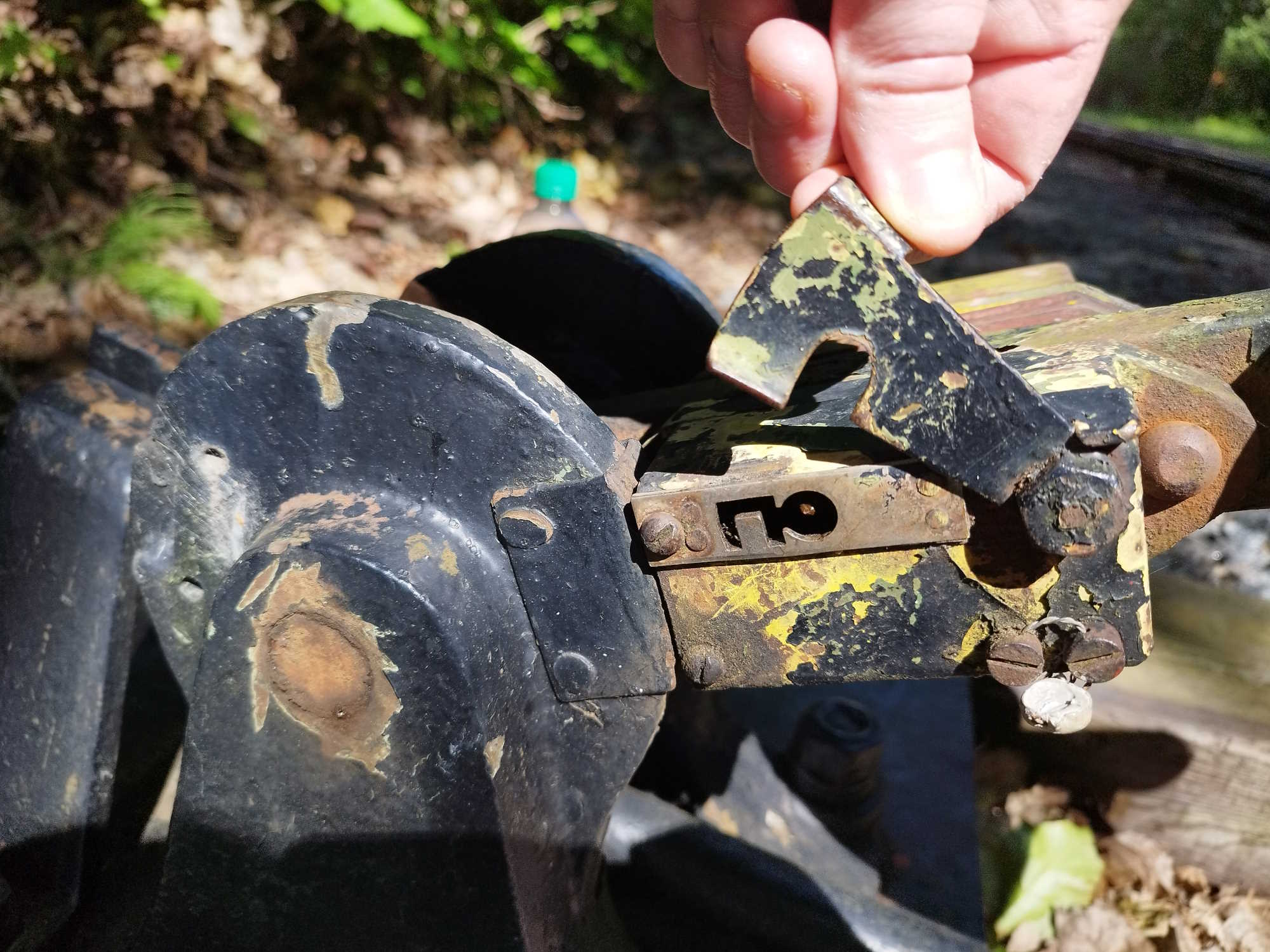
This is the Locking Frame at Lenna; the levers operate the locking slide bars.Key K¹ is locked into place in the frame. K² is for the ‘other’ point. ‘A’ is one of the home signals. Note the different key profiles that are required.Key K³ is locked into the point and cannot be removed until the ‘other’ key has been inserted, and the point changed.Key K³ has been removed, locking this point in its position. (We know it’s a ‘K³’ from the profile.)
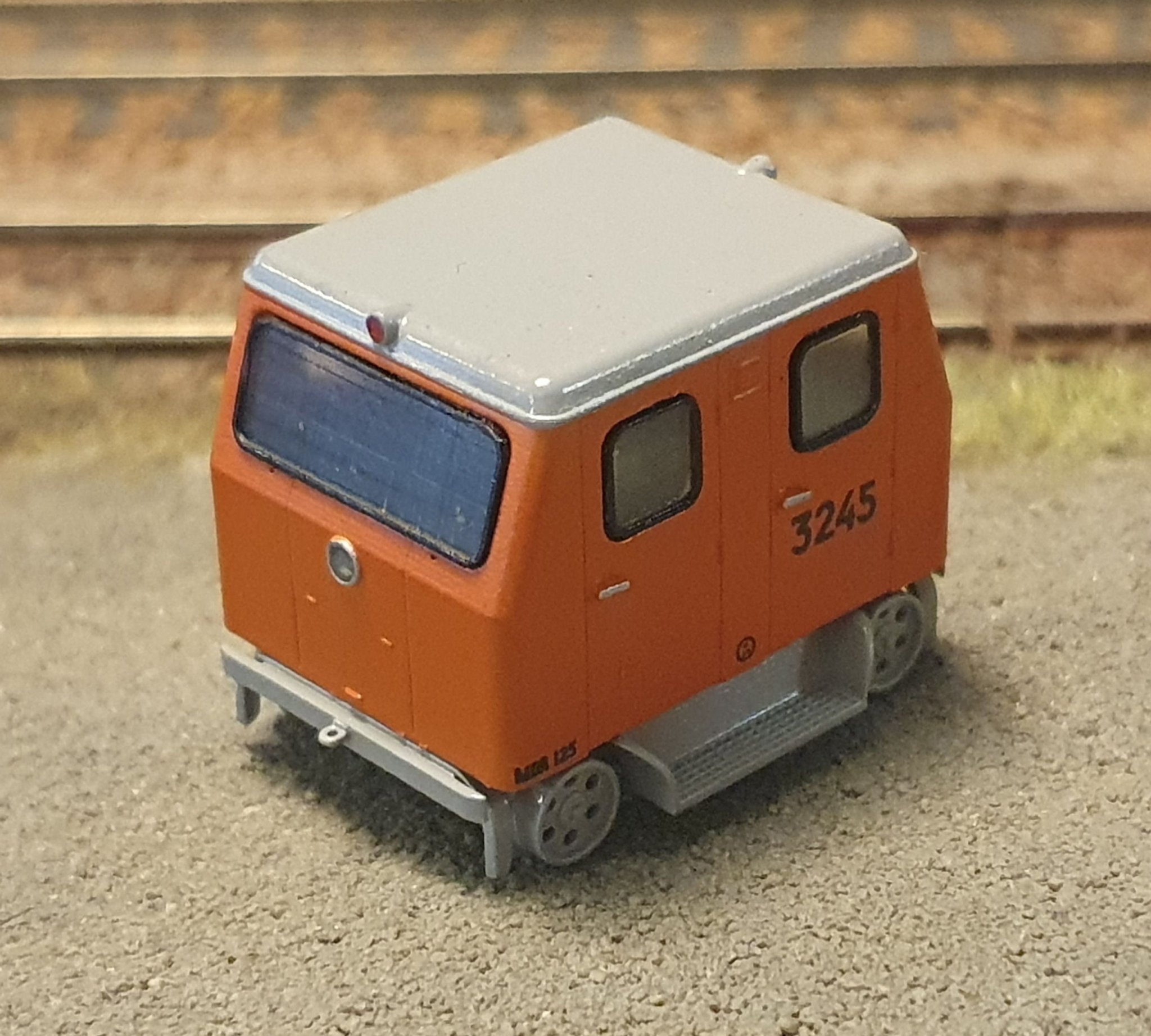
We have acquired another dressin; not another ‘modified Volvo’ but a purpose-built MDR125. It is a static resin model (and cannot be made to work), but it will look good just parked in a siding somewhere! One of the most common service vehicle types of all time is the MDR (MDR = Motordressinen). Many hundreds of dressines were produced from the 1920s until the 1960s. The dressines were used for, among other things, passenger transport and inspections, but also ambulance transport on the Malmbanan. Many have later been scrapped, but some are still used today. However, they have increasingly been replaced by motor trolleys and dual-mode vehicles (cars that can be used on both road and rail) which have more areas of use. (There is no direct English translation for Dressin, so this and the plural Dressines have been spelt accordingly to aid pronunciation, notwithstanding any misinterpretations!) Ours, number 3245 is from the batch MDR 125, nos. 3244-3309, with four doors, built by Bergbolagen Lindesberg in 1956. They ran on petrol, and were also known as ‘meatballs’ or ‘peas’ depending on who you ask!
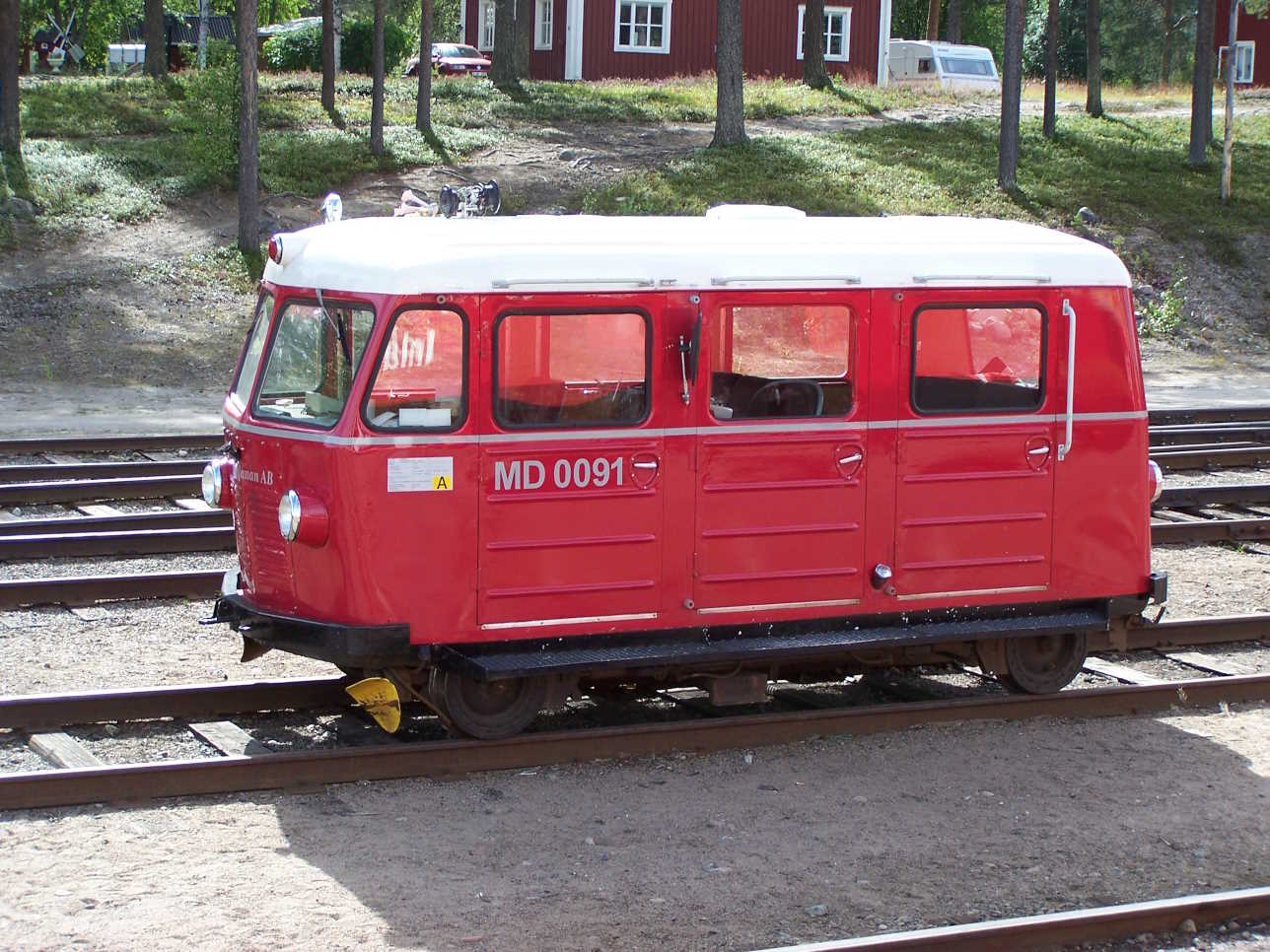
Internet photo of the MDR 125; but these did not usually stand off the rails.Internet photo of MDR 125 3245 on the track; a nice addition to any siding!Three assorted MDR at a location somewhere along the Inlandsbanan.MD 0091 on the Inlandsbanan; typical of the quintessential Dressin.
Other News
We have recently acquired a book from 1979 about service wagons with UIC numbering. From it, we have learned that the UIC letters for service vehicles don’t follow the same rules as most other wagons. For example, an ‘a’ as the second character does not mean that the vehicle is mounted on bogies. Whilst this explains how our ‘Qab’ can have only two axles (and the ‘Qbd’ is on bogies), it has raised a question about our ‘Qab’, a Heljan model. According to the book, ‘Qab’ applied to a type of plough that was never actually used (an allocated code). Former FV1 vans are shewn as a type ‘Qae’ (Q5) Impregnation works, later Weed control wagon, ‘Qgb’, stores wagon, ‘Qgg’, trailer, ‘Qlh-h’, cleaning wagon (“-h” with drying room), and so it goes on. There is a number list and our wagon 945 4 229 should be a ‘Qgb’ until late 1976, when it was rebuilt to type ‘Hvös’. It was a former FV1, number 25770. Now, curiosity really did get the better of us and we looked in SMJ’s book on 1930s carriages. It was one of the first, built by AB Svenska Järnvägsverkstäderna, Falun in 1937. However, here we learn that after a time as ‘Qgb’, it became ‘Qfa’ (in 1986, after the book was published, so the type isn’t listed). We understand, but this is not confirmed, that the van still exists at Nässjö, where there is a railway museum.
The ‘Qab’ is a former Fv1 (F5).
By contrast, our ‘Qbd’ ballast wagons are (Roco) models of a type formerly known (pre-UIC) as ‘Q32b’, and were built by Talbot, 1957-58. Easy!
Behind the Scenes
Mini-Series around the FLMJ; H: The Website
As mentioned earlier in this mini-series, we were not the fastest to go online, and justifiably so. There seemed little need, and everything was ticking over nicely. But, we were often asked if the Railway had a website where people could follow its progress, and ‘put like that’, it seemed a good idea. One of our Friends created both of our websites; the original one using the technology that was available at the time, but was cumbersome to maintain; and the current one, which is closer to basic desktop publication, and can be regularly updated with ease by other members.
The website was naturally intended to bring news about the Railway, and how everything was progressing. It was like a blog, and to some extent remains as such. However, with so much research being necessary, and wanting to share this hobby as much as possible, the website also became a repository of articles relating to the Swedish railways, be they features about locomotives, wagons, signalling systems, or whatever else we have needed to research. And this seems to be the main attraction today (well of course, whilst the FLMJ is closed, there’s not much else to write about)! Much of our research material can be found on the internet, in Swedish; so we present it in English. Only our own updates are available in both languages, and this is something that needs to continue if the Railway is to truly ‘belong’ here.
Nevertheless, there is a genuine fear among railway groups that too much information on the internet is having a backlash, and membership numbers in societies catering for special interests within the hobby are dropping. These specialist Societies have been reporting an average of 20% loss in subscriptions. The British based Scandinavian Railways Society is suffering this effect, and both their former website and our website, may have been contributing to this effect; by giving away so much information online, that there seems little need to join a society, no matter how friendly! They have reigned in their website so that it promotes the Society without giving away too much general knowledge, but will soon have a members’ area where the articles can be placed. We will follow suit, but with edited copies of the articles freely visible, and the more detailed articles available to our Friends. We identify ‘Friend’ (note upper-case ‘F’) as someone who is actively involved with the Railway’s development, maintenance and operation; someone who would be if they weren’t so far away, or have other barriers (but, including regular guests); and someone who has shewn significant interest and with whom we have regular correspondence. So, we feel that this is a suitable way to move forward in this digital age without causing the specialist Societies, the SRS especially, to suffer.
Next month: the Special Reports and Local Promotion
Vi har köpt en vagn typ Bo14a, modell av Piko. Det är en typ som skulle ha byggts för en privat järnväg och senare förvärvats av SJ (vilket numret, 3867, antyder). Denna vagn kanske inte ens är 100% äkta, men den är en bra representation av typen och har likheter med standarddesignen från 1930-talet. Liksom Rocos Bo8a från OKB och absorberad av SJ har den delvis öppna fönster! Det är en snyggt byggd modell och jobbet för juni var att eftermontera NEM-kopplingsmekanismer. Vi använde den vanliga Symoba-enheten och med förbehåll för testning verkar allt ha gått bra. Men hjulen…! Nej, inte som vissa andra senaste köp, dessa är inte ac, men deras flänsar är inte lämpliga för kod 83 räls! Men vi har kunnat trimma dem!
Vi fortsatte vårt arbete med modellen av Åmåls stationsbyggnad. Den emaljmattsvarta färgen hade verkat ha torkat blank, och verkligen ljus lyste igenom! När vi letade igenom en “modelleringslåda” som vi hade fått, hittade vi lite mattsvart akrylfärg, och detta fortsatte med bättre resultat. (Rännorna och stuprören lämnades dock blanka.) Vi målade även fönsterbågarna (Humbrol) Aircraft Blue. Åmål station hade blå fönsterbågar vid vårt besök (för ca 20 år sedan(!)), men vi bestämde oss för att detta var för mörkt, och den valda färgen är ganska populär i Sverige för fönsterbågar!
Tillverkarens Nyheter
Med så korta somrar är det typiskt att de flesta företag här lägger ner i en månad eller två! Så det finns inga nyheter från tillverkarna.
Andra intressanta nyheter
Vi har lagt till en länk till Model Railway Forum, som är baserat i Storbritannien, och vänder sig mest till den brittiska järnvägsmodelleringsscenen. Ändå finns det lite kontinentalt innehåll där och det hanteras av en av våra vänner!
På vår kommande evenemangssida har vi tyvärr varit tvungna att markera en som “inställd”. Järnvägsevenemang med europeiska tema i Storbritannien minskar i antal, och detta hade varit ett stort evenemang för Scandinavian Railways Society (tillsammans med Global-Rail, som brukade hållas på Didcot). SRS kommer att ha sin reklammonter vid French Railways Societys evenemang i augusti och vid det stora Warley-evenemanget i november. Dessutom väntas några av deras medlemmar med danska eller norska modelljärnvägar till Bridport i slutet av juli, Comberton i början av september (ej bekräftat), Willand i mitten av september, Aldershot i oktober och Westbury i november.
For our heritage fleet we acquired a carriage type Bo14a (a Piko model). There is quite a long history to this type of carriage, and it would have been built for a private railway and later acquired by SJ (which the number, 3867, suggests); indeed the designation seems to relate to various different designs and bodies and so on. This carriage might not even be authentic, but it is a good representation of the type and has similarities with the standard 1930s pattern. Like Roco’s Bo8a from the OKB and absorbed by SJ, it has partially open windows! It is a nicely made model and the job for June was to retrofit NEM coupling mechanisms. We used the standard Symoba device, and subject to testing, all seems to have gone well. However, the wheels….! No, not like certain other recent purchases, these are not ac, but their flanges aren’t suitable for code 83 rails! But so slightly, that we were able to spin the wheels and use a file to marginally trim them! Job done; a bit of a bodge, but not unsightly and no compromises.
We returned to our work on the model of Åmål station building. The enamel matt black paint had seemed to have dried glossy, and indeed light shone through! Searching through a ‘modelling box’ that we had been given, we found some acrylic matt black paint, and this went on with better results. (The gutters and downpipes were left glossy, however.) We also painted the window frames (Humbrol) Aircraft Blue. Åmål station had blue window frames at the time of our visit (about 20 years ago(!)), but we decided that this was too dark, and the colour chosen is quite popular in Sweden for window frames!
Piko Bo14a 3867, retrofitted with NEM coupling sockets.Light blue window frames (right) and acrylic matt black (left) for our replacement model of Åmål station building.
Manufacturer News
With such short summers, it is typical that most manufacturers in Sweden shut down for a month or two! Not just model railway manufacturers, but across the country. People naturally want to make the most of the short period of very good weather! (But firmly imprinted on the memories of some club members is a holiday to Sweden, which included a trip to Öland, Sweden’s primary holiday destination, to find nearly all of the restaurants shut for the summer! This seemed a little strange, and greatly inconvenient.)
Other News
Shortly before India’s devastating train crash, there was a high-speed derailment at Arlandastad, very near to where Adrian lives. Fortunately, it was the rear of the train that left the tracks at 150kmh, and only two people needed to be taken to hospital. Had it been the front, the consequences would have been more catastrophic. Already, poor permanent way has been identified as the cause; and just like in the UK, concerns had been raised by workers, which were ignored by managers. It is our understanding that the section is a little peculiar in that it is privately owned and maintained by the company whose train derailed (which is why they can charge a fortune to customers to/from other train operators to use their platforms at Arlanda); and for the endangerment to life, there is a possibility of criminal charges being levied. Of greater hope to all passengers who use the airport is the possibility that they will lose their monopoly; and then travel to and from the airport can be without the extra charges. But, time will tell. Until then, we continue to urge all passengers (as we did even before the derailment) to take the local SL bus to the railway station at Märsta for onward travel, or the direct busses to Stockholm or Uppsala cities.
We’ve added a link to the Model Railway Forum, which is based in the UK, and caters mostly for the UK railway modelling scene. Nevertheless, there is a little continental content there and it is managed by one of our Friends!
On our forthcoming events page, we have sadly had to mark one as “cancelled”. European themed railway events in the UK are dropping in number, and this had been a big event for the Scandinavian Railways Society (along with Global-Rail, which used to be held at Didcot). The SRS will have their promotional stand at the French Railways Society’s event in August, and at the big Warley event in November. Additionally, some of their members with Danish or Norwegian themed layouts are expected at Bridport late July, Comberton early September (not confirmed), Willand mid September, Aldershot in October and Westbury in November.
Behind the Scenes
Mini-Series around the FLMJ; G: The Articles
Köpingsvik, the KRBJ, the FLMJ, and even Steninge, all featured in glossy railway magazines around the world. Peco Publications’ magazine, “Continental Modeller” is a companion magazine to “Railway Modeller”, but as its title suggests, it’s for non-British railways. The editor has nearly always been grateful to receive articles, and generally does a good job as editor. Köpingsvik was featured as a special feature, a stand-alone railway for indoor use, which was also part of a garden railway. We didn’t write a full article about the KRBJ as we had just extended to Röjeråsen (at the time of the Köpingsvik article), and there wasn’t much to show for it; yet we didn’t want to keep delaying! There existed, for a short while, a similar magazine in the US, catering for non-American layouts. This is a very low-interest area and sadly the magazine did not last for long; but the publication of a similar article about Köpingsvik was well received. In Sweden, the newly built FLMJ was featured in an edition of “Tåg” before they dropped all modelling interest, and much more recently in “Modeljärnvägsmagasinet” (“The model railway magazine”)! A very good dialogue is maintained with the editor there; and he has been keen to translate our English submissions to Swedish, given that it will be a while before Adrian is fully fluent! (Other themed articles have been sent also, hence the plural!) Returning to the UK, it is natural that the Railway has featured in “Skandiapilen”, the journal of the Scandinavian Railways Society. Without doubt, articles about a new railway will be sent to all relevant magazines, when the time is right to do so.
How the FLMJ was seen in Sweden’s primary railway magazine, ‘Tåg’.
Vi har inga järnvägsuppdateringar denna månad. Vi hade hoppats på att åka med ett arvståg under maj, men detta ställdes in med kort varsel. Bilderna med våra engelska nyheter är från ett besök på öppen dag, där SÅS håller sina tåg vid Hägersten.
Tillverkarens Nyheter
Jeco visar nu en bild på en modell av en Rc4 i Epoch-IV skick för att stödja deras föreslagna release av en sådan modell. (Tidigare var bilden som användes en Rc2.) Vi hoppas kunna köpa en, kanske två!
Ryktena har bekräftats; förutom en 2019 Volvo V60 kommer PCX87 att producera 2019 Volvo V90 i fyra färger, alltså: PCX870384 svart metallic PCX870385 grå metallic PCX870386 silver PCX870387 beige metallic
Minichamps, som har föreslagit inte mindre än två Saab-bilar och sex Volvo-bilar, alla med fyra av varje, och alla passerat deras ursprungligen föreslagna leveransdatum, har nu lagt till en engångsföreteelse till förslagen, en Resin-version av Volvo 240 sedan från 1986. Det kommer att bli billigare än de försenade ABS-modellerna, men om denna levereras eller inte, återstår att se. (Artikel D87171400, för leverans 5.2023!)
Andra intressanta nyheter
På denna webbplats har vi gjort några mindre tillägg till informationen i vår artikel om YCo6 (datebox) järnvägsbussar; inklusive littra av de som åkte till Danmark, hänvisning till att några också åkte till Norge, och att finnarna hade sin egen bredare spårvidd, byggd på licens i Finland.
We hoped to have a report and some photos from a rail-tour that was to happen mid-May, with steam traction for some of the way; but it seems that the TOC didn’t give the infrastructure authority enough time to approve the journey, so it didn’t get approved. A visit was made instead to an open day with another group who planned to run a couple of short return trips with a steam loco the following day (already approved); but we had heard a rumour that Stockholm County had introduced a ban relating to steam trains and other fire risks because the weather was too warm and dry to be safe. So, the plan was to watch the online tracker to see if the first train ran, and if it did, venture out to ride on the second one. In the event, the first one did run but didn’t shew up on the tracker; then there were reports of a lineside fire on the route, which cancelled all trains, including the second trip. As the first one didn’t shew up, we hadn’t ventured out for the second; so we avoided disappointment!
The view from the cab of a class T21 of the rather cramped facilities for SÅS at Hägersten.SWB Third class carriage 138, operated now by SÅS.Inside SÅS’s SWB carriageS1 tank loco 1921 at Hägersten; sister loco 1928 was preserved in England, but its whereabouts (or existence) today are unknown!
Manufacturer News
Jeco is now shewing a picture of a model of an Rc4 in Epoch-IV condition to support their proposed release of such model. (Previously, the photo used was an Rc2.) This assures our confidence with the model being correct, and justifies our purchase of one, maybe two!
Publicity image from Jeco of their proposed Epoch-IV Rc4 loco.
The rumours have been confirmed; in addition to a 2019 Volvo V60, PCX87 is to produce the 2019 Volvo V90 in four colours, each costing 22,95€, thus: PCX870384 black metallic PCX870385 grey metallic PCX870386 silver PCX870387 beige metallic
Minichamps, who has proposed no fewer than two Saab cars and six Volvo cars, all with four of each, and all past their originally proposed delivery dates, has now added a one-off to the proposals, a Resin version of the Volvo 240 sedan from 1986. It will be cheaper than the delayed ABS models, but whether or not this gets delivered, remains to be seen. (Article D87171400, for delivery 5.2023!)
Pre-production image of the Volvo V90, proposed by PCX87.Pre-production sample of Minichamps’ Resin model of the Volvo 240 sedan.
Other News
On this website, we have made some minor additions to the information in our article on the YCo6 (datebox) railbuses; including the classification of the ones that went to Denmark, reference to the fact that some also went to Norway, and that the Finns had their own broader gauge version, built under licence in Finland.
Behind the Scenes
Mini-Series around the FLMJ; F: The Calendar
Home produced for many years, until just before the Railway’s closure, is the calendar. This is now professionally produced, and whilst copies are available for sale (if ordered and paid for in advance), they mainly serve as yuletide ‘presents’ for our Friends. The images would normally reflect the year gone by (usually November to October so that we had a chance to get it produced and proliferated before the end of the year), but of necessity, the recent few years have carried historical photos with a particular theme. One recent year for example, was our trains on tours to other model railways. This year, it was to have been the scenery (not many trains to be seen, but appropriate scenic modelling to be appreciated instead); but the FLMJ didn’t have much of that, and having looked through the selected pictures, we just felt completely uninspired! So, in the 11th-hour we changed it to so-called “runner up” photos; those which are quite nice, but had previously been neglected in favour of other, similar photos. We haven’t decided on a theme for next year, yet!
Of course, the calendars always had a nostalgic and inspirational feeling. Having visited the railway, people would see the images and remember the enjoyment that they had during that visit (and kept them coming back, or so we like to think)! And even today, it keeps people interested, to want to know how we’re progressing with getting a new layout ready to start.
The first copies were printed in exactly the same way as our journals, but everything was printed, inclined at 90°. For a couple of years, we used glued-on colour photos; then colour ink-jet printing became available. Spiral binding was too difficult and costly to manage, so they would be staple-bound with great care to ensure that the staples were precisely in the middle so that the pages folded properly without creasing. A simple single hole was then punched so that they could be hung on the wall. We did experiment one year with a diary instead (month to a view, picture on one side, dates on the other); thus removing the need to hang the item or turn the printing through 90°, but that was not popular. Then, one year, a calendar was received from a friend, professionally printed, and we liked it so much that after a few enquiries, we ’went professional’ the following year. This did push up production costs, but the greatly improved quality is worth it. And, even though these calendars are not especially cheap to acquire (nor to send), we do intend to keep up this tradition.
Vi har målat mattsvart på insidan av några hussatser för att blockera interiörbelysningen från att lysa igenom plasten. Vi kommer då att montera fönster och dörrar, men inte faktiskt montera dem; så att vi kan lägga undan dem i deras lådor tills ett permanent hem har hittats åt dem. Vi började med modellen av Åmåls stationsbyggnad (vår Lövhöjden, som behövde bytas ut efter att ha skadats av så mycket väder). Under denna månad har vi även tagit del av några bra priser på Joswood laserskurna kit och två har köpts in, redo för samma behandling.
Tillverkarens Nyheter
HNoll har kommit med fler nyheter. Förseningar beror som vi redan vet på problem i Kina med Covid, och problem i Sverige med räntor och generellt stigande priser! B4/BF4/BF7 väntas på sensommaren. Resten av A7/B7 och specialvagnarna väntas strax därefter. A11/B11 skulle vara nästa, men för närvarande finns det inte tillräckligt med intäkter från befintliga modeller för att betala för deras produktion. HNoll befarar att folk kommer att ge upp att vänta och behålla sina Roco-modeller, men när HNolls överlägsna kvalitet väl uppskattas tror vi att de flesta modellbyggare kommer att välja att ändra dem. Första generationens A7/B7 och BFS9 finns på ritbordet/CAD. Förutom ett omnämnande av B2/B10 finns det, klokt, inget vidare utvecklingsschema. (Vi hoppas på följande modeller: A7 (första serien), B7 (första serien), B2, B4 och UAF7, alla i brunt, två av varje utom UAF7 (en). Om HNoll skulle producera R4 i brunt utan InterCity pil skulle en av dem också vara trevlig.) Utöver 1980-talets vagnar överväger HNoll 1940-/1970-talets BC2 liggvagn, 1960-talets R1 restaurangvagn och 1960-talets WL1 sovvagn. (Alla dessa skulle passa oss väldigt bra.) De skulle vara dyrare än befintliga modeller eftersom de nästan inte har några designdetaljer som kan “bäras över” till/från andra modeller! (Varken R1 eller WL1 finns i NMJ:s 1960-talsvagnar.) HNoll planerar fortfarande att tillverka ett Ma-lok i toppklass, även om Jeco har en befintlig modell; och vi befarar att detta skulle hamna i priskategorin Brimalm och locka så få köpare att det inte skulle vara en klok investering. (Varför inte bygga en acceptabel modell av Mg-loket; det skulle vara mycket mer användbart och populärt?) Dessutom vill HNoll producera X10-enheten och alla dess derivat. De enda aktuella modellerna är satserna från SWB/UGJ, men med ett Byggsvenskt chassi fungerar dessa fint; skulle X10 locka tillräckligt många köpare för att vara värd att producera? Vi skulle föredra X9; aldrig gjort färdig att köra tidigare, men en bra representation av SJ:s rullande materielhistoria.
Andra intressanta nyheter
Vi har återställt en länk till det Storbritannien-baserade Scandinavian Railways Society, nu när deras webbplats är tillbaka under samhällets kontroll och ser mycket bättre ut; snyggt, läsvärt, relevant, osv…! Vi har också lagt till en länk till Model Train Prices på vår hemsida. Priser på modeller jämförs mellan butiker, inklusive 20 i Sverige; men det är inte bara för svenska modeller. Prova och se.
It’s been a low-activity month, again. We won’t bore you with the saga of finding a suitable home for the Railway, because it is just about buildings. But this has taken up a lot of time recently. Desperate to do some model-related activity, it was decided to open some of the housing kits, paint matt black on the insides to block interior lighting from shining through the plastic; and then fit things such as windows and doors. Stopping at this point means that the kits can be put back in their boxes, for assembly once in situ in the eventual location. But we can also use a very low-tack adhesive if we want to put them together for photography or other reasons! During this month, we also took advantage of some good prices on Joswood laser-cut kits, and two have been purchased, ready for the same treatment. We started with the Heljan model of Åmål, as used at Lövhöjden. Our existing model is quite badly weather-damaged, so having found an unbuilt kit on Tradera (the Swedish ‘eBay’) some time ago, we decided that it would be good to replace it. In addition to the insides of the walls and rooves, we painted the gutters and downpipes, chimney tops (and insides), and small details on the main base plate. Looking further ahead, we are intending to not use the printed paper curtains, because the interior lighting shines through the curtains but not the space in-between. Instead, we intend to fit home-made interior walls, basic interior details suitably painted, and have a more authentic appearance. Quite how well this goes will be determined as we do it!
The Joswood summer house and school buildings, as kits.Matt Black (looking glossy whilst wet) has been applied to the insides of this model to prevent the light from shining through the plastic!Åmål station building, by Heljan, seen here at the old Lövhöjden.
Manufacturer News
HNoll continues to keep modellers up to date with developments, and despite all the problems being experienced, Rickard remains up-beat, which is good to know. The problems are of course, the delays in China due to Covid; and an enormous hike in interest rates and utility prices, affecting people’s ability to buy the models, and subsequently HNoll’s ability to produce the next round of models. a) The B4/BF4/BF7 are expected late summer. b) The remainder of the A7/B7 and the Special carriages are expected soon after. c) The A11/B11 would be next, but currently there is not enough revenue from existing models to pay for their production. HNoll fears that people will give up waiting and retain their Roco models, but once HNoll’s superior quality is appreciated, we think that most modellers will choose to change them. d) First Generation A7/B7 and the BFS9 are on the drawing board / CAD. e) Other than a mention of the B2/B10, there is, wisely, no further development schedule. (As a point of interest, we are hoping for the following models; A7 (first series), B7 (first series), B2, B4 and UAF7, all in brown, two of each except the UAF7 (one). If HNoll were to produce the R4 in brown without the InterCity chevrons, one of those would also be nice.) There are however, mentions of other, non-1980s carriages; either to accompany the proposed ‘InterCity’ concept train or as requested by modellers. These are the 1940s/1970s BC2 couchette carriage, 1960s R1 catering carriage, and 1960s WL1 sleeping carriage. All of these would suit the FLMJ very well. They would be pricier than existing models because they have very few design details that can carry over to/from other models! (Neither the R1 nor WL1 are in NMJ’s 1960s carriages range.) HNoll still plans to produce a top-of-the-range Ma-loco, despite Jeco’s existing model; and we fear that this would end up in the Brimalm pricing category and attract so few buyers, that it would not be a wise investment. (Why not build an acceptable model of the Mg-loco; that would be much more useful and popular?) And on top of this, HNoll wants to produce the X10 unit and all of its derivatives. Fair enough; the only current models are the kits from SWB/UGJ, but with a Byggsvenskt chassis, these work fine; would the X10 attract enough buyers to be worth producing? We’d prefer the X9; never made r-t-r before, but a good representation of SJ’s rolling stock history.
The Märklin R1 (with reduced scale length) is seen in a train on the old KRBJX10 3149 (the prototype for the FLMJ’s model) at Kungsängen.X10 3149 at the original Köpingsvik station.
Other News
We’re delighted to re-establish a link to the UK-based Scandinavian Railways Society, now that their website is back under Society control, and looking much better; tidy, readable, relevant, etc…! We’ve also added a link to Model Train Prices on our website. Prices of models are compared between shops, including 20 in Sweden; but it is not just for Swedish models. Try it and see. As a rule of thumb, there is very little price competition between the shops for Swedish models. (Customer service says a lot, here in the Nordic territory.) Swedish models are produced in small batches to match the smaller demand than for other countries like the UK, Germany, US, and so on. Smaller quantities lead to higher prices, so there is very little margin for shops to compete, knowing that the prices have to be low enough to attract customers, but without putting themselves (or the manufacturers) out of business. Look above at the problems being experienced at HNoll, for example.
Behind the Scenes
Mini-Series around the FLMJ; E: The Stocklist
Additional to the Year Book, and with a similar cover photo, we have produced a printed Stock List every year. Its purpose was simply to catalogue all locomotives, units, carriages and wagons that we have here. Even after a computer program became more relevant, this provided a good back-up, quick and easy to read. But only one copy was ever printed, and kept on file. This has been maintained, but this year’s list (as always, correct to January 1st,) could be the last. We also have this information in other formats, formats that are more useful to us with regards to operating the railway; such as a service schedule in Excel. A simplified list is produced in Word and is taken to all events and places where there might be an opportunity to acquire desired models; its purpose is to ensure that we can avoid duplicating existing models! And this copy is sufficient for our insurers. In our previous updates, we considered the future alternative for the Year Book. It could include elements from this book; if we feel that it makes interesting reading.
“Tillbehörspacket” till Dm3-loket kom under mars, så vi började jobba med att montera så många delar vi kunde. Först, de goda nyheterna; det finns ett kinematiskt kopplingsfäste som är lämpligt för dummy SA3-kopplingarna, så dessa har monterats och Kadee-enheterna kommer gradvis att tas bort. Det fanns en viss frustration och förvirring med innehållet, och som ett exempel behöver loket fyra speglar, förpackningen innehåller sju, fyra svarta, tre kroppsfärgade. Ingen av dem passar bra och vi var tvungna att vidga hålen i kroppssidorna och trimma beslagen. Värre var dock monteringen av en av bromsslangarna med buffertbalksnivå, en tät passform, och när vi tryckte in den i lokkarossen sprack – rakt fram! Tack och lov, med lite penetrerande lim och sedan lite superlim på insidan när den väl torkat är sprickan nästan osynlig – tills vi någonsin behöver ta bort kroppen! (Hur gör en svag bromsslang så stor skada? Loket kanske redan var skadat och det var så det slutade som en begagnad rea!) Ledstängerna gick in vackert, och som ett tips till alla som har en av dessa lok; det finns en rätt väg upp för ledstänger; toppbeslaget och underbeslaget är inte samma sak!
Efter att ha monterat SA3-kopplingarna på Dm3:an var det naturligt att de två malmvagnarna, var och en med SA3 i ena änden och standard H0-koppling i den andra, skulle modifieras därefter, och nu har de båda SA3 i var sin ände.
Tillverkarens Nyheter
Vi har läst att PCX87 hade utställt på Nürnberg-mässan, en Volvo V90 (se förra månaden om V60). Återigen, för modernt för vår epok, men trevligt att se att moderna bilar av detta märke börjar dyka upp. (Ändå finns det ungefär ±25 år i historien att fylla!)
Rietze har tagit fram en modell av Solaris Urbino 12 Hybrid i modern X-trafik-livery, och för gott skull en elektrisk version för grannlandet Norge. Vidare har de producerat bussen MAN Lion’s City E 18 i “Gamla Uppsala Buss”-livery från 2018.
Andra intressanta nyheter
Gamla Lidingöbron för spårvagnar på Lidingöbanan kommer snart att ersättas av nya Lilla Lidingöbron. Inför bytet av bron kördes några specialturer med Lidingöbanans veteranspårvagn, SSLidJ 17, som var fullsatt. Resorna gick mellan Ropsten och AGA, och innehöll tre returkörningar och en enkel resa till AGA, där depån också finns. Den nya bron är subtilt välvd, så den behöver ingen lyftsektion och är dubbelspårig över hela sin längd. Några snäva kurvor (nåja, inte snäva för en spårväg) vid Ropsten-änden kommer att leda den nya sträckningen in i den befintliga stationen.
The ‘accessory bag’ for the Dm3 loco arrived during March, so we set to work fitting as much as we could. First, the good news; there is a kinematic coupling attachment that is suitable for the dummy SA3 couplings, so these have been fitted and the Kadee devices will gradually be removed. There was an amount of frustration and confusion with the contents, however, and as an example, the loco needs four mirrors, the pack contains seven, four black, three body-colour. None of them are a good fit and we had to widen the holes in the body-sides and trim the fittings. Worse however, was the fitting of one of the buffer-beam level brake hoses, a tight fit, and as we were pressing it in the locomotive body cracked – right across the front! Thankfully, with a bit of penetrating glue and then a little superglue on the inside once dried, the crack is almost invisible – until we ever need to remove the body! (How does a feeble brake hose do that much damage? Maybe the loco was already damaged and that is how it ended up as a second-hand sale item!) The handrails went in beautifully, and as a tip to anyone who has one of these locos; there is a right way up for the hand rails; the top fitting and the lower fitting are not the same!
Dm 1222 with handrails, mirrors, brake hoses, wipers; and an invisible crack across the front!
Having fitted the SA3 couplings to the Dm3, it was natural that the two ore wagons, each with SA3 at one end and standard H0-pattern at the other, should be modified accordingly, and now they both have SA3 at each end.
Manufacturer News
PCX87 is understood to have had on display at the Nürnberg trade fayre, a Volvo V90 (see last month about the V60). Again, too modern for our epoch, but nice to see that modern cars of this brand are beginning to appear. (Still, there’s roundly ±25 years gap of history to fill!)
Rietze has produced a model of the Solaris Urbino 12 Hybrid in modern X-trafik livery, and for good measure, an electric version for neighbouring Norway. Furthermore, with local sponsoring, they have produced the MAN Lion’s City E 18 bus in “Gamla Uppsala Buss” livery from 2018.
The Rietze Solaris bus for Xtrafik.The Rietze Solaris bus for Ruterby (Norway).The Rietze MAN bus for Uppsala.
Other News
The old Lidingö Bridge for trams on the Lidingöbanan will soon be replaced by the new Lilla Lidingö Bridge. Before the replacement of the bridge, some special tours were run with the Lidingöbanan’s veteran car, SSLidJ car 17, which was packed full. The trips ran between Ropsten and AGA, and featured three return workings and a one-way final trip to AGA, where the depot is also located. The new bridge is subtly arched, so it needs no lifting section, and is double-track over its entire length. Some tight curves (well, not tight for a tramway) at the Ropsten end will lead the new alignment into the existing station.
Heritage tram SSLidJ 17 at Ropsten.Looking across the new Lidingö bridge to a modern A36 tram on the old Lidingö bridge.
Behind the Scenes
Mini-Series around the FLMJ; D: The Review of the Year
By about now, we would have produced our annual review, and its title would have been “FLMJ 2022”. (Well, it exists on computer, but not in print!) Inspired by the lamented “Nordens Järnvägar” series by Stenvalls, it would report on all new rolling stock arrivals, new equipment, withdrawn and sold items, operational challenges; and mostly as a colour photo album with very little text. Earlier editions were also bi-lingual. Although none have been physically printed since the FLMJ closed, they have continued in digital production, and a PDF version is available upon request. Recent editions have said very little more than the stock changes (but they do have a look at the modern railway scene to provide inspiration), and even once the new railway gets started, we are wondering if we want to continue with this publication? Following the demise of Stenvalls’ year-book, they produced 6 editions of “Lok & Vagnar” at sporadic intervals. These carried less information about stock in and out, but more about themed items, technical details, usage, and in a relevant format. Might this work for us, too? Whilst online updates are timely, the purpose of our book was to summarise the year, a record of that year, a keepsake. Is that really necessary and of interest? Or do people still enjoy the nostalgia of something in print to discover when having a clear-out? We are discussing this with our friends. On thing that the Review was intended to report on, was the so called, “2020 Vision”, the great plan for the Railway to reach Fjällnäs by (or during) 2020. It would have been a timely record of how well we did and ultimately tell the story of how the FLMJ finally reached Fjällnäs, the ‘F’ in our title. So, this is something to discuss among our Friends. We already have a template for a different way of reviewing the Railway’s development; but will it be just a new name for an old format, or will we be able to find something more relevant? The key difference, of course, is that the internet has changed the way we do almost everything these days. With the former FLMJ’s Director General now working in a book warehouse, there is an element of empathy towards that medium, but relevance is key.