Tag Archives: Steninge

Nyheter för tredje kvartalet 2025

Våra nyheter

Jecos Rc4 1182 har anlänt till butikerna (tillsammans med andra nya modeller), och en har anlänt hit. Denna modell är privatägd och utlånad till järnvägen tills en tidpunkt som har överenskommits gemensamt. Det är en fin modell, och dess prestanda “direkt ur lådan” är mycket bättre än T23. En märklighet som vi faktiskt gillar är att modellen har felmatchade plogar; en snöplog i ena änden och en älgplog i den andra! Speglarna behövde monteras och den reflexmässiga delen målas på, men en av våra var något trasig, så extra försiktighet kommer att krävas när man böjer dem till rätt profil!

Efter långa överväganden “bakom kulisserna” har vi beslutat att ersätta det föreslagna stationsnamnet “Skarpa Gård” på RTJ med “Sköndal”. Inget annat har ändrats; det kommer att bli en lantlig plats mellan Rickbacken och Töjnan, och troligtvis den första som faktiskt byggs!

En av våra vänner i Storbritannien äger nu Steninge-modellen och har renoverat den. Av bilden (i den engelskspråkiga uppdateringen) framgår att den är lite mer utbyggd nu och att spåret läggs om helt. Medan arbetet fortskrider visades dioramat på en utställning i början av juni. Y1-järnvägsbussen är i Epoch-V-lackering (1990-2010-tal-liknande)!

Modellnyheter

HNoll har producerat konferensvagnen S4 i ASEA-lackering (före ABB-lackeringen) och om vi hade haft pengarna hade vi köpt en!

Jeco har nyligen tillkännagivit den föreslagna produktionen av inte mindre än 20 TGOJ M4 3-axliga malmvagnar som ska finnas tillgängliga i fyra paket med fyra vagnar och två paket med två vagnar. Idealiska lok för dessa vagnar är deras föreslagna TGOJ Bt-lok, eller nyligen producerade TGOJ Ma-lok.

One87 har via sin onlinebutik Tradera producerat fungerande modeller (som byggsatser) av spårspärr som används i sidospår (istället för den brittiska “catch point”), en länge förbisedd artikel. De har också producerat modeller av Kalmar plattformstraktor, med släpvagn.

PCX87 Saab 900 sedan har anlänt till butikerna; fyra olika färger plus en svensk “polis”-bil.

Andra intressanta nyheter

Rc2 001 (en tidigare ÖBB klass 1043, men i alla avseenden samma som SJ Rc2) har målats om till den tidigare färgsättningen som den bar under tjänstgöring i Österrike. Tio extra Rc2 byggdes för ÖBB och levererades i SJ-färgsättning (utan markeringarna), och de var mycket framgångsrika. Så småningom pensionerades de alla och de nio överlevande fördes tillbaka till Sverige, där de används i gods- och “service”-transporter. De skiljer sig från de svenska versionerna med olika strålkastar- och bakbelysning, en modifiering som gjordes under ÖBB-ägandet.

Rc4 1166 har målats om till en Amtrak-lackering av sina nya ägare, Nordic Re-finance. Denna är nästan identisk med den lackering den bar när den skickades till Amtrak i USA för provkörningar, vilket slutligen ledde till beställningen av ASEA-lok av typ AEM7, vilka i huvudsak är Rc4 i en annan kaross! De var mycket framgångsrika och Amtrak var inte det enda företaget som köpte dem. I skrivande stund används detta lok nästan uteslutande av Nässjö järnvägsmuseum för deras icke-ångtågsresor.

Nu väntar vi bara på att se om Rc6 1377 kommer att döpas om till Rc5 och målas i antingen den vit-silverfärgade lackeringen eller den “disco”-lackering som följde!

News for third quarter, 2025

Our News

Jeco’s Rc4 1182 has arrived into shops (along with other new models), and one has arrived here. This model is privately owned and on loan to the Railway until a time that has been mutually agreed. Overall it is a nice model, up to the detail standards that Jeco manage so well; and its performance ‘out of the box’ is much better than the T23, for example; though it will need running in, properly. The ‘set place’ for the driver-side windscreen wiper is not the correct resting place and it would be an irritation to the driver being right in his line of vision. One oddity that we actually quite like is that the model has mis-matched ploughs; a snow plough at one end and a moose plough at the other! The mirrors needed attaching and the reflective part painted on, but one of ours was slightly broken, so extra care will be needed when bending them to the correct profile!

After lengthy considerations ‘behind the scenes,’ we have decided to replace the proposed station name ‘Skarpa Gård’ on the RTJ with ‘Sköndal.’ Nothing else has changed; it will be a countrified location between Rickbacken and Töjnan, and most likely the first to actually get built!

One of our Friends in the UK is now the owner of the Steninge model, and he has been rebuilding it. From the photo, it can be seen to be a little more built-up now and the track is being completely re-laid. Whilst work is progressing, the diorama made an appearance at an exhibition at the beginning of June. The Y1 railbus is in Epoch-V livery (1990s-2010s-ish)!

Model News

Quite unannounced, HNoll has produced the S4 conference carriage in ASEA livery (predates the ABB livery) and had funds permitted, we would have liked one here!

Jeco has recently announced the proposed production of no fewer than 20 TGOJ M4 3-axle ore wagons to be available in four packs of four wagons, and two packs of two. Ideal locomotives for these wagons are their proposed TGOJ Bt-loco, or recently produced TGOJ Ma-loco (but it seems that the TGOJ Hg-loco was used on other duties, including shunting these wagons).

One87, via their online Tradera shop has produced working models (as kits) of the derailers used in sidings (instead of the British ‘catch point’), a long overlooked article. They have also produced models of the Kalmar platform tractor, with trailer.

The PCX87 Saab 900 saloon has arrived into the shops; four different colours plus a Swedish “polis” car, and at least one especially commissioned livery that we know about. Its window and door profile seem a little different to their 3-door hatchback, but there’s 7 years between production versions (the saloon from 1981, and the hatchback from 1988).

Other Interesting News

Rc2 001 (a former ÖBB class 1043, but in all respects, the same as the SJ Rc2) has been repainted into the earlier livery that it wore whilst in service in Austria. A local business in Sweden made up the special number plates so typical of those used in Austria. Ten extra Rc2 were built for the ÖBB and supplied in SJ livery (without the markings), and they were so successful that ÖBB followed them up with the more locally built class 1044, which were not as successful! Eventually, they were all retired and the nine survivors were brought back to Sweden, where they are used in goods and ‘service’ operations. Visibly, they differ from the Swedish versions with different head and tail lighting, a modification that was made during ÖBB ownership.

Rc4 1166 has been repainted into an Amtrak livery by its new owners, Nordic Re-finance. This is almost identical to the livery it wore when it went to Amtrak in the USA for trials which ultimately led to the order for ASEA locomotives type AEM7, which are essentially Rc4 in a different body! They were very successful and Amtrak was not the only company to buy them. At the time of writing, this locomotive is being used almost exclusively by Nässjö railway museum for their non-steam rail-tours.

Now, we’re just waiting for Rc6 1377 to be rebranded Rc5 and painted in either the white-silver livery, or the ‘disco’ livery that followed!

Nyheter, april 2021

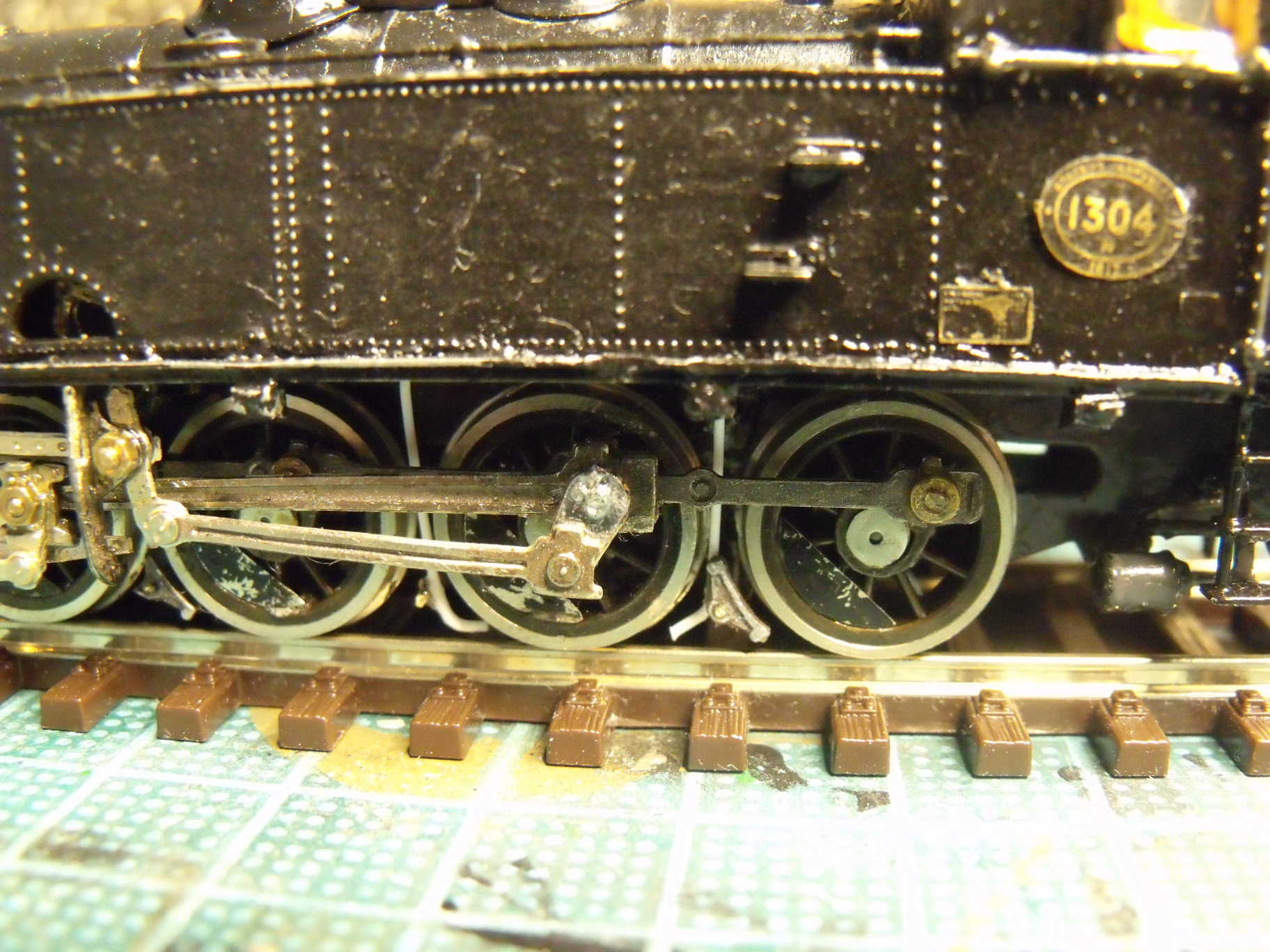
N 1304 är redo för fullständig testning och körning. Med lite hjälp från en vän som har erfarenhet av walschaert-redskap gjordes många förändringar, inklusive åtdragning av lösa anslutningar så att de inte vaggar så mycket. Många delar behövde beskäras ytterligare, inklusive tapparna på hjulen som håller kopplingsstängerna. Till vår glädje hittades den ”förlorade” mässingsmuttern och vi monterade den på Expansion Die Block, och det är nu en mycket mer uppmuntrande passform! När vi hade fått loco (chassit) igång på testbanan var vi redo att montera karossen och då fungerade det inte alls! Efter långvarig undersökning fann vi att en del av kroppen “bara” rörde kopparkontaktremsan på den “isolerade sidan” och orsakade en kortslutning. Den enklaste lösningen för detta var isoleringstejp, men för att säkerställa dess livslängd stöddes dess applikation med lite Loctite Superglue! Jobbet färdig!

Vi blev så uppmuntrade av detta framsteg, att vi lödde på anslutningarna så att belysningen också skulle fungera och sedan monterade hytttaket. Motorn ger ganska hemskt ljud när den trasslar längs, men vi är hoppfulla att detta kommer att slå sig ner under inkörningen. Arbetet slutade dock inte här. Under allt avhjälpande arbete skadades de tunna plastbromsarna, så de togs bort och behövde monteras igen (se nedan). Vi beslutade också att inte montera den främre kopplingen förrän en ersättning för den trasiga delen hade erhållits. Det finns också en önskan att ta bort hyttens sidoavledare och ersätta dem med transparenta (för att vara mer autentiska), men det är inte brådskande. Och kanske kommer vi att skaffa och montera gasflaskan för belysning; tills dess måste vi argumentera för att loco har elektrisk belysning!

Vi gjorde ett nytt försök med bromsbackarna. 0,5 mm plast hade varit för spetsigt och varade inte länge. Tyvärr försvann en av bromsskorna under denna tid. Ersättning av 0,5 mm mässingsstång anskaffades tillsammans med 0,5 mm (inre) rör. Med detta kunde vi förstärka stängerna mellan ramarna, och därmed stod stavarna exakt vinkelrätt mot ramarna framför hjulen. Rören klistrades fast på ramarna och stavarna klistrades inuti. Sedan var skorna superlimade och såg till att de var rätt inriktade och inte rörde på hjulen eller ens stängde. Sedan, som en extra detalj, och eftersom vi fortfarande hade massor av plast 0,5 mm stång kvar, gjorde vi några sliprör och gick ner till hjulen med hjälp av bromsstängerna för att stödja dem på plats (vilket vi inte kunde göra , naturligtvis, om de arbetade bromsar)!

Andra nyheter:

PCX87 har släppt sin Saab 900 (1986-modellen) i fyra färger, som en tre-dörrars halvkombi. Detta är en intressant utgåva eftersom den följer deras Volvo 240, och båda modellerna har föreslagits av Minichamps, om än olika (men nära) årsmodeller. Kommer Volvo 480 och 850 att följa snart?

Vår tidigare Steninge-layout har ett nytt hem. Vi skilde oss från det för många år sedan, och en del arbete var nödvändigt för att hålla det i användbart skick. Vi tror att det gick runt några vänner, men nu är det med en annan, en vän till FLMJ, och förhoppningsvis kommer det att få ett nytt liv.

April 2021 News

Rolling Stock Update

N 1304 is ready for full testing and running in.  With some assistance from a friend who has experience of valve gear, many alterations were made, including tightening up loose connections so that they don’t rock so much.  Many parts needed further trimming, including the studs on the wheels that hold the coupling rods.  Much to our delight, the ‘lost’ brass nut was found and refitted to the Expansion Die Block, and that is now a much more encouraging fit!  Once we had got the loco (chassis) running on the test track, we were ready to fit the body, and then it wouldn’t work at all!  After lengthy investigation, we found that part of the body was ‘only just’ touching the copper contact strip on the ‘insulated side’ causing a short circuit.  The easiest fix for this was insulating tape, but to ensure its longevity, its application was supported with a little Loctite Superglue!  Job Done!

We were so encouraged by this progress, that we soldered on the connections so that the lighting would work also, and then fitted the cab roof.  The motor makes quite an awful racket as it trundles along, but we are hopeful that this will settle down during running in.  The work did not end here, however.  In the process of all the remedial work, the flimsy plastic brake rods got damaged, so they were removed and needed refitting (see below).  We also decided not to fit the front coupling until a replacement for the broken part had been obtained.  There is also a desire to remove the cab-side deflectors and replace them with transparent ones (to be more authentic), but that is not urgent.  And maybe, we will obtain and fit the gas cylinder for the lighting; until then we will have to argue that the loco has electric lighting!

We made another attempt with the brake shoes.  The 0.5mm plastic had been too flimsy, and didn’t last long.  Sadly, one of the brake shoes got lost during this time.  Replacement 0,5mm brass rod was procured, along with 0,5mm (inside) tube.  With this, we were able to reinforce the rods between the frames, and thus the rods protruded exactly perpendicular to the frames in front of the wheels.  The tubes were superglued to the frames, and the rods superglued within.  Then the shoes were superglued, making sure that they were correctly aligned and not touching the wheels or even close.  Then, as an extra detail, and because we still had lots of plastic 0,5mm rod left over, we made some sanding pipes, going down to the wheels, using the brake rods to support them in place (which we couldn’t do, of course, if they were working brakes)!

Manufacturer News

PCX87 (Premium Classixx 1:87 scale) has released their Saab 900 (1986 model) in four colours, as a three-door hatchback.  This is an interesting release in that it follows their Volvo 240, and both models have been proposed by Minichamps, albeit different (but close) year models.  Will the Volvo 480 and 850 follow soon?

Other News

Two extra items this time.  First, the Steninge layout has a new home.  We parted company with it many years ago, and some work was necessary to keep it in useable condition.  We think it went around a few friends, but now it is with another, a friend of the FLMJ, and hopefully it will get a new lease of life.

Not quite a case of Caveat Emptor, but getting close: be very careful if you should choose to use Google Translate for translating between English and Swedish (or any translation).  Once, an excellent tool for assisting with translation, it seems to have become quite a liability.  Recently, a test was made of 25 Swedish phrases (converting to English), and 25 English phrases (converting to Swedish).  We had a 62% failure rate (wrongly translated).