Category Archives: AJ News

News from Adnalms Järnvägar

May 2020 News

A few new models arrived in May. One is an old Märklin RBo2 restaurant car (later known of course as the R1R), a 1960s design, which will be used in a rake with NMJ 1960s coaches until NMJ (or somebody else) produces something more reasonable. The Märklin model does shew its age, and of course, it is 1:100 scale length instead of the correct 1:87. But, it gives us a dining carriage, and we have often complained about the lack of dining (and sleeping) carriages for SJ in H0-scale! (We have also changed the wheels, of course!)

Of four goods wagons arriving, three are Dekas ‘Hbis’ wagons; very high quality and very nice. The other new wagon is a TGOJ F6 bicycle van made by NMJ, and replaces one that we sold ages ago, but later wished that we hadn’t!

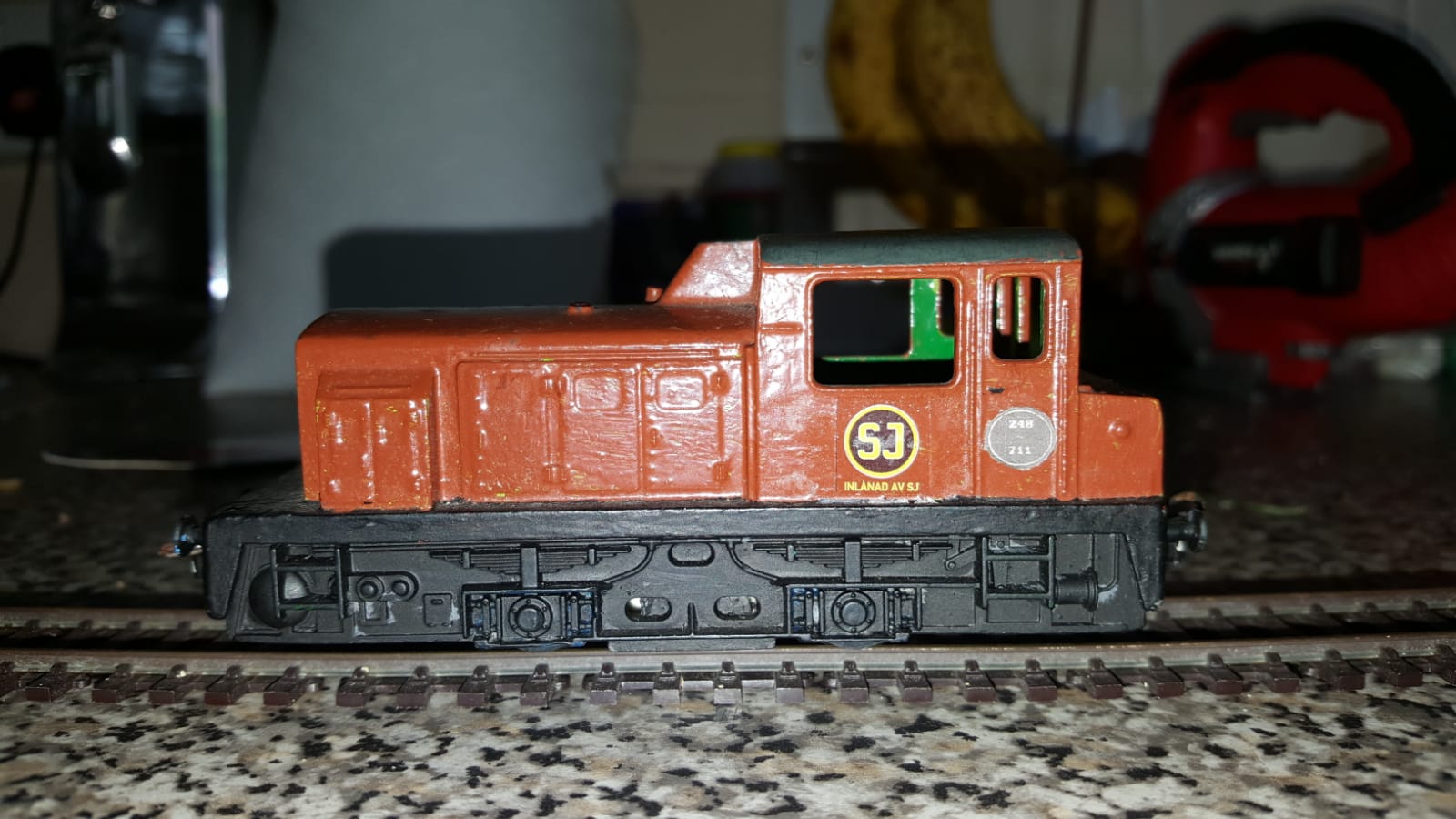
Z48 711 departed the FLMJ in May. This was a freelance diesel shunter based on a German design, and intended for use (at the FLMJ) with track testing before the power cables were wired up, but the Triang Z65 locos often took this duty (and now Rc3 1027 or X10 3148 can do it), so it was seldom used.

Our workshop models had a little more work done during May; the headlamps on the D-loco were refitted and fit much better now, and new couplings were fitted, now NEM compliant. Also, the SMJ carriages had some adjustments to the steps, couplings and assorted other bits between them. The C3d also had its roof ‘plumbing’ put on! The buffers were fitted to the C3g and CF3 (they are a tight fit, so don’t need gluing), and Roco couplings were inserted to the NEM boxes. Unfortunately (and curiously) they are too low (despite having the same chassis as the C3d), so further investigation is necessary. We had hoped to use the close coupling facility to push the buffers in to the right depth. We also found that the D-loco NEM boxes need adjustment (or the buffers need trimming)! Not much more could be done without paint—so we ordered some matt black and satin black! With this we were able to paint the etched brass parts, and then the end gates and fall plates were fitted to the D-loco, with more work on the carriages to follow in June.

Two former FLMJ wagons have been worked upon following structural failure when sold! These are Klein Modellbahn SJ ‘Fas’ wagons labelled for use with SNCB (Belgium), and were a limited edition. They have plastic bodies and a very tightly fitting metal floor (for weight). Unfortunately, the metal has fatigued and actually ripped the plastic bodies! One wagon was easily repaired by filing down the metal (and making a few other minor adjustments) and fitting it all back together. The other wagon’s floor has shattered and is so badly distorted that it will need replacing. The plastic has been found to be very soft, so it’s a poor combination, really (a design fault). They’re quite beautiful wagons, otherwise, and very authentic (the real ones can be seen in an early “Svenska Tåg” film).

We have been looking at dates and anniversaries. Whilst any new railway (FLMJ) cannot be rushed, there is a slight sense of urgency to mark the 30th anniversary of the opening of the KRBJ from which the FLMJ emanated. This would be in 2022. It is hoped that we can run a first train ‘somewhere’ then, but it is too early to plan. Certainly, the 40th anniversary would be the bigger event, so we’re not losing sleep! But the following few years have anniversaries that we would like to acknowledge if at all possible:

  • 2023 will be 70 years since the famous ‘Datebox’ railbuses were introduced. That is worthy of a special event; the FLMJ has a few models of these and many of our guests could bring more to make any celebratory event extra special.
  • 2024 will be 40 years since the Roco Rc5 was introduced! This loco has been a ‘standard’ setter for many years and the original version was probably the best Rc-loco as a model.
  • 2025 will be the centenary of the introduction of the successful D-loco, so that ought to be celebrated. We have two Jeco models and of course we have our Lokstallet/Jeco project under way right now.
  • 2026 will be the centenary of the electrification of the Stockholm-Göteborg mainline; so we ought to have the new FLMJ ‘electrified’ by then! We intend to put up the cables as we build the new railway, but this might not be possible. Like all plans for any new railway, nothing can be set in stone until a location and job/work pattern has been established.

There are further dates to consider, but this is enough to be going on with for now!

We’ve had a peculiar experience recently with a Trader in Sweden whom we won’t name, in the hope that this is a once off! We enquired about purchasing eight wagons without being specific (which ones precisely), and how payment could be made if we did place an order. The payment method was not practicable and only some of the wagons were in stock. (They had received only 30% of their order due to Covid-19 issues, and they had been very popular)! So, we looked elsewhere and found them in stock and payment could be made, and thus ordered elsewhere. The trader in question then advised that the wagons were on their way, so could we arrange payment? We thanked them and advised that we had found them elsewhere, to which the trader responded by declaring that the wagons had been ordered especially for us, and we had in effect cancelled our order for which a fee was payable! The real facts are that we made an enquiry, not an order; we did not specify which wagons we wanted, so how could they have known which ones to order; they told us that 70% of their original order was still to follow (so the order had already been placed), and that the wagons had been very popular (so there was no problem in finding customers for them). They wanted payment by IBAN, which from a Lloyds bank account costs between £20 and £30—quite out of the question. It seems a very strange way to treat a new customer; don’t they want to stay in business? Caveat Emptor!

An unusual model car has arrived for a cameo on the new railway, a Messerschmitt KR200! Anyone familiar with the Swedish comedy character Stig Helmer Olsson will know what sort of cameo we have in mind!

April 2020 News

Under so-called UK lockdown, the opportunity to work upon some of the more challenging kits was seized… the SMJ 2-axle carriages. The etched brass parts will need painting later, so where possible, they will be assembled and fitted with a low-tack adhesive for completion at a later date. Some changes have been made with their identities. SJ C3d 2128 (which would not have previously been from the OKB / East Coast Railway) was intended to be number 1984, but this number is not on the decal sheet (neither is 2128, but this is easier to ’manufacture’). Unfortunately although the C3d is a ‘plåt’ model (metal body), the number transfers are for the timber version, so a spare number 2 will replace the 6 in decal number 2168! SJ C3g 2996 (which would have previously been OKB C3 133) was intended to be number 2994, but this number would also need changing whilst the new number is on the sheet. SJ CF3 3017 (which would have previously been OKB CF 235) was originally believed to be type CD4, but it’s correct identity is on the sheet. The C3d and C3g are standard carriages, the C3d as a standard SJ version, and the C3g is as acquired from the OKB. The CF3 is a former OKB carriage with a luggage compartment. The OKB carriages were taken over by SJ in 1933.

Upon opening the package, it was refreshing to be reminded that the C3d was built and just needed decals (and a few adjustments). The C3g and CF3 are some way behind and it was done in this way so that the C3d could be used as a built sample (having taken a lot longer to build because it involved a dry-run first) and then as reference material for the later two. Unfortunately, we also needed the instruction sheets (but these are in storage), but thankfully, SMJ has them on their website as PDF downloadable sheets, both SJ and OKB versions. (Much appreciated, guys; thanks!) Here’s how it went, not in any particular order (unless stated otherwise, the following applies to both C3g and CF3):

  • The wheel-set ‘bolsters’ had their brake mechanisms fitted, and were then fitted to the chassis. The wheels have also been fitted, and both carriages are more freely running than the C3d!
  • The battery boxes and gas containers (the latter for the dessous gas lighting) were assembled and fitted to the chassis, and the one-piece compressed air brake with link arms glued into place.
  • The coupling mechanisms were assembled and fitted, then a stretcher between the bolsters to hold them straight when on straight track, and thirdly the springs and stretchers for the couplings. However, it was found that two components for the CF3 were missing, so we improvised with the couplings and they work just as well as on the other two models. We were also able to modify an improvisation that had been made on the SJ C3d regarding couplings, and again, the result is pleasing.
  • The buffer stocks were filed, trimmed and fitted. The actual buffers will be a last fitting because they are very fine and risk being damaged during construction!
  • The weights were glued into place, and now the carriages feel as sturdy as the C3d!
  • The appropriate windows were fitted with grilles (luggage areas) or clouded (toilet areas).
  • From a little research, we found that the luggage compartment doors on the CF3 should not be the same colour as the body, so our paint has been scraped off, and touched up with a permanent marker!
  • The etched brass parts, the end platforms and the steps (including the luggage door steps on the CF3, which had to be made from scratch) have been fitted. The gates have also been fitted, and for this reason, the rooves will remain loose until we have been able to paint them! The platforms on the C3d have been removed and refitted, and are a much better fit.
  • The rooves were fitted with their ventilators, and have been loosely fitted (to be painted, later). Using spare parts from these two models, we fitted the roof ventilators to the SJ C3d, thus virtually completing that model (disregarding the decals—still)!

Aside from these carriages, work was done on the träkorg (wooden body) D-lok, which certainly relieved the pressure of the work on the SMJ carriages. Again, there are some parts that will have to wait until later, but here’s how it went:

  • Hooters and windscreen wipers were glued into retro-drilled holes. Sun-shades were made from scrap brass strip and glued into place.
  • Lamp lenses were glued into their holes, but they’re slightly too small, so will be refitted later with a bit of ‘putty’!
  • The Pantographs were fitted into place, but one needed gluing because the screw thread was missing! It took some effort to obtain a drawing of the roof layout for the HT wire, but a source in Sweden procured the perfect image. The pans will need replacing because they are the wrong type!

The end gates with fall plates need painting (they’re etched brass) so they have not been fitted, and there are no handrails, so they will need making from scratch. But, we’re going to need to think of a way of providing the tail light because it is a raised fitting and very different to the inbuilt design used on the steel bodied version of the D-loco, as made by Jeco.

Moving onto relevant model manufacturer news: Dekas is bringing out a model of the SJ Y2 ”Kustpilen” unit available in either original blue/red livery or current (2020) livery. Delivery is planned for 2nd quarter, 2021; and the FLMJ would be interested in one as it represents the end of the epoch modelled (in the same way that the X2000 does). Dekas has also brought out some ‘Hbis’ wagons (types 712 and 731) at very short notice, and they sold out over one weekend. Hopefully, some more will be made.

March 2020 News

As probably expected, new models from China are delayed due to the current global health situation! Once the situation has improved, there may then be investment issues affecting the ability to produce and pay; so the situation is very volatile right now

Another international issue is that of Brexit, and the need to pay customs duty on imported goods, but also to be able to claim back the VAT. During the transition period, this has already got very messy with traders not yet required to deduct the VAT, but Royal Mail (in the UK) is already charging import duty and handling fees!

There has been some exciting news from Nürnberg, this year!
NMJ seems to have finally acknowledged modellers’ desires by producing a prototype model of SJ cafe carriage type RB1 from the 1960s series. However, if delivery (or lack thereof) of the Y1 is anything to go by, we shouldn’t get too excited!
Dekas is bringing out the SJ ‘Hbis’ covered sliding door wagon in six different versions, for epoch IV and V.
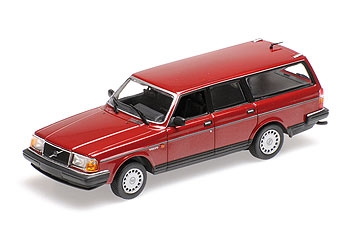
Minichamps has announced models of the Saab 900 Turbo 16S coupe and convertible from 1987, the Volvo 240 GL sedan and estate car from 1986 and Volvo 740 GL sedan (and possibly estate car) from 1986.
Busch is bringing out a Land Rover Discovery of a later-year model, labelled as a Swedish police car.

Considering the exciting news from NMJ, what else would suit the 1960s range?

  • The RBo2 (later R2, then R1 very soon after) dining carriage would be a very suitable model, preferred over the RB1, actually. (Märklin has produced a poor 1:100 scale length model for many years.)
  • The DFo28 (later DF28, then D38, then D48) postal carriage would be very interesting because even during epoch IV they had different liveries. Several of these alone would make an authentic train (so various running numbers would be required).
  • The WLABo1 (later WL1) sleeping carriage is the only 1960s design that SJ has left in traffic, so again, there would be more livery options, but not all-over black—yet!
  • (This leaves the F5/F6 short baggage carriage, but there are many Lima models still available second-hand, and the later ones were of very good quality, complete with NEM couplings.)

MJ-Hobby intends to organise a small model railway event during the Halloween weekend in Västberga, instead of the big event at Älvsjö. They will have some activities and displays in their shop and some on the other side of the road; as it was several years ago. This event has always been popular with the customers!

Modelleisenbahn München GmbH (who owns both Fleischmann and Roco) has announced that the production of Fleischmann Profi-glis track has been discontinued forthwith. This is because a few of the tools for production have broken down and repair is not possible and new production is not considered economically justifiable. Thankfully we did not use this track on the FLMJ, and we have none in store.

HNoll has announced that work is underway to develop a model of SJ´s and TGOJ´s Ma locomotive in all versions (400, 700, 800 and 900 series). It is scheduled for 2021, but with the current global situation this cannot be relied upon. The price is not known either! Contrary to earlier news, HNoll has now said that they will not pause operations. It would have negative consequences in the factory in China and would have a negative impact on Hobby traders. They will instead reduce the volumes and thus create demand with a smaller supply of models. This clearly means that customers should pre-book models at hobby shops to ensure delivery of the first stage of restaurant cars. The Blue-X Concept and InterCity Concept products have been discontinued because the product as it was presented cannot be delivered as intended. Conversations with Roco did not result in anything constructive, not even an answer. There is a possibility of developing a model of the Rc locomotive or having a conversation with another manufacturer on the matter!
HNoll has also advised that due to the circumstances prevailing in China, it has been decided to temporarily close the factories. This means delays in the delivery of the Restaurant Carriages but also future models. One cannot predict how long the delay will be!

And finally … returning to the theme of emergency messages by mobile (see the last paragraph in our news update from 03.01.20): It happened on Tuesday 24th March; many mobile owners received a short text implying that it was from the government. It said very little (nothing of any help), and contained a link; exactly what scammers and spammers do; so most people simply deleted it! (The text read: “GOV.UK CORONAVIRUS ALERT. New rules in force now: you must stay at home. More info and exemptions at gov.uk/coronavirus Stay at home. Protect the NHS. Save lives.”) The government had to work with the operators to get the message sent because an emergency alert system, trialled seven years ago, was never put into practice. If it had been, the government could have bypassed the operators and sent messages directly to mobiles, as has happened in other countries and is what happened in Sweden with the contaminated water. The report on the trial said it would be possible to send alerts to the public within 15 minutes of making a decision, but in the event, some alerts took 24 hours to reach the mobiles. It was suggested by the BBC that the system was not put into practice because cost was an issue!

February 2020 News

The D-loco has had its glazing fitted, and was on static display at The French Railways Society “Winter Rendezvous & Exhibition” at Lenham, where the Scandinavian Railways’ Society had a stand! There were no other D-locos there, only a Da-loco, which was in use on the DCC track, so nothing to compare it with! Since that event, the buffers have also been fitted. This required more than just pushing them into place because they were a little wider than the shafts, so some drilling and filing was necessary; but they’re in! The only remaining items that we have and intend to use are the roof insulators, but it is better to wait until we can fit the wire and pantographs at the same time (we have some ‘piano’ wire already in stock). We’re not going to use the headlight blanks, as working lights are more favourable. So, an order is being prepared for hooters/whistles, windscreen wipers, end doors with gates and fall-plates, lamp lenses, handrails, etched plates and number transfers, and pantographs.

HNoll has added a second brown restaurant coach to their proposed range, so the FLMJ will not need to purchase a red one (in order to have two), which would have been slightly too modern!

There seems to be a bizarre situation on the Swedish railways presently, where the Norwegian railway company, Vy (formerly NSB) has won the contract for the Stockholm to Narvik sleeper trains from mid-December. SJ retaliated at this loss by announcing the withdrawal of the Stockholm to Göteborg section for the sleeper trains, and the Jämtland sleeper trains; effectively “throwing their toys out of the pram”! Vy didn’t bid for the Stockholm to Göteborg section because there were already too many trains along that route, but with SJ’s withdrawal, they are going to put in a bid, apparently! Maybe, the Jämtland trains will get a bid, also? SJ, more recently, came to its senses after a petition signed by 23,000 people, and declared that the Jämtland to Göteborg services will remain during high season, but that hasn’t prevented Snälltåget now taking an interest in that route, also!

Having mentioned above, the Da-loco on DCC, it was amusing (in a cynical way) to be able to listen to the sound of the diesel engine ticking over in an electric loco. Long Live Analogue!

January 2020 News

In our update on 01.06.19, we welcomed the HNoll brand into production, with the reservation about the boxes not accommodating ‘close coupling’ heads. HNoll has listened (or read), and subsequent boxes have had their inner trays modified to allow for this consideration. Full marks to them for listening and responding to their customers. (Roco, take note!)

And another follow-up: in response to our question about emergency texting in the UK, a correspondent has said that technically, the functionality does exist, it is just with the politics of how the system is set up in the UK. So, at the risk of being seen as comedians, here’s how it might work… The emergency is identified, and an internal message is sent for the emergency notice to be issued. Naturally, this will be somewhere within the Civil Service, and the authorisation lies with a manager who is in a meeting. Once the manager has been consulted, form XQZ.v1 needs to be completed, but form XQZ.v1 cannot be found. So the form is ordered, and it arrives two weeks later. In the meantime, half of the population has been poisoned … but, good news for everyone else, the emergency has been lifted. So the request goes out for the follow-up text to go out, which requires form XQW.v1 to be completed … you get the picture…? It won’t happen!

The Lokstallet D-loco body and Jeco D-loco chassis were matched in January, and although a tight fit, they went together very well. We have paused in order to conduct a bit more research regarding the placement of the tail-lamp. The chassis comes with working lights, but the body is designed for no lights. Fitting lenses over the open lamp apertures (instead of the ‘plugs’) should be fairly straight-forward, but the body does not seem to have any provision for the tail lamp, and it would be a shame to waste the working lamp. It will not receive the number 597 (as mentioned last month) because loco number 597 never had a timber body, so 174 is more likely. The book on the D-loco doesn’t seem to indicate pantograph type, so further research will be required there. But the book did indicate which way round the body goes; a look at roof shews that the fittings are different along its length, and this of course has to marry-up in relation to the drive shaft.

Brekina has announced some new model cars which are especially suitable for a Swedish or other Scandinavian layout. The Volvo 66 was developed by Daf, and produced by Volvo when they took over that Dutch firm. The Volvo 343 replaced it. The Saab 92 was Saab’s first production car and a model has been available from some time by VV Modelle, and sold exclusively by the Stockholm Model Railway Club. That model is in the original green livery used for the first three years; the Brekina model has later liveries. The Saab 99 was a revolutionary car when introduced, incorporating many features ahead of its time enabling people to take the brand more seriously; the previous model, the 96 was becoming quite dated.

Pre 2020 News (summary)

Here is a selection of news articles from 2019; more items can be found on the old website.

As 2019 drew to a close, we said ‘good-bye’ to our two Triang shunting locos, based on the Z65 design. The arrival of the more authentic Jeco version rendered these models surplus, and a purchaser was found from within the Scandinavian Railways Society, so at least it is nice to know they’re going to a good home.

From departures to arrivals… a body and some accessories for a ‘D’ electric loco have arrived from Lokstallet in Sweden. This, we hope, will fit (with or without some modifications) to the Jeco spare rolling chassis that we have. The essential difference from the r-t-r Jeco model is that this will be a model of the wooden-body version. Curiously, although we have etched number plates (for loco number 597), we do not have any transfers for the buffer beams, but we can sort that out later. Also, the pantographs will need to be purchased separately, and Entec will be the most likely supplier here. Entec, quite sensibly, advertise their models by the prototype that they represent (pantograph type LLXJE 135, for example) and not by locomotive types that they would have been fitted to, so we will need to dig out from storage our book on the D-loco to find which type we need!

Whilst driving through Sweden in November, an interesting SMS was received from ‘sosalarm’, thus (translated here): “Important communication to the public in Hallsberg and Kumla municipality in Örebro county. The municipal drinking water has been shown to be contaminated by bacteria. The municipal management encourages everyone to boil the water before consuming. Sampling begins immediately. For more information listen to Sweden’s Radio P4 Örebro.” Then on the return journey through that area, “Hallsberg and Kumla Municipality in Örebro County announce that the danger of unfit water is over. The requirement to boil the water is lifted and you can now drink the water just as usual.” I am not registered with any alarm system so I was quite surprised to receive these texts. But it seems that the situation was so serious that EVERY mobile within the region had to receive them. Does this facility exist within the UK?

Jeco’s new X16/X17 railbus has arrived into store without warning! It had been hinted at nearly ten years ago and then no more was heard of it. Then, in a newsletter from MJ-Hobby on November 1st, both models (X16 and X17) had become available in stock for the princely sum of SEK 3495:- each. Catching modellers out by surprise is not a particularly wise move as people’s funds could be too limited (especially in the run-up to Xmas), and nobody really had the chance to allow for it. This situation (thinking about allocating funds for it) will preclude any arriving into stock for the FLMJ or whatever replaces it (we’ll continue to say “FLMJ” until we know differently)! (The model is of course, very similar to the Y6 series of diesel railbuses. Sadly it seems the model is too much so; it doesn’t have the correct (different) window layout for the electric version!)
Still with Jeco, the ‘older’ style Ma-locos, and the green TGOJ ones have arrived. The older style means original large headlamps and original door positions; there may be other subtle differences, also. The images used in advertising do shew different bodyside windows for the SJ and TGOJ versions, which is correct. Sadly, the orange TGOJ one that is wanted for the FLMJ had sold out on pre-order, so we won’t be getting one. Whilst upsetting, this is not a major loss; we would have preferred the orange livery with the later lights—as seen during Adrian’s first visit to Sweden in 1990! The brown SJ version, which is wanted by a friend of the FLMJ has been delayed due to a fault in detail where the so called ‘A’-end markers were fitted at both ends. This needs to be corrected, of course.

Two Jeco E2 models (one of each, 904 and 1333) arrived at the home of an FLMJ member, one for the FLMJ, but being retained until the FLMJ can pay for it! The urgency of the purchase is due to the “limited edition” nature of the model, and we don’t want to miss out! We are grateful for this kind offer. Both models were tested and the FLMJ one had a fault with the lighting, which has been traced to the DCC “Blanking Chip” which the supplier has now replaced. (Although it is a ‘blanking’ chip for use when not using DCC, they are not ‘standard’, different locos use different chips.) But, it runs beautifully!

Construction of the new FLMJ is unforeseeable at the moment. It could be another year to 18 months, for some of the most incredible reasons, which sadly, we cannot publish! Not yet, anyway. Consideration has been renewed in the Byxelkrok project (as hinted last month).

A second road-trip to Sweden has been completed (no photos this time, sorry), to help the emigrating friend move all their belongings. This needed to be done urgently because from December 1st a new Swedish law requires all visiting vehicles to have Winter Tyres during the period up to the end of March—this would be a problem with a British hire vehicle, so the journey was urgent. At least Adrian now has an idea of costs when his turn comes.

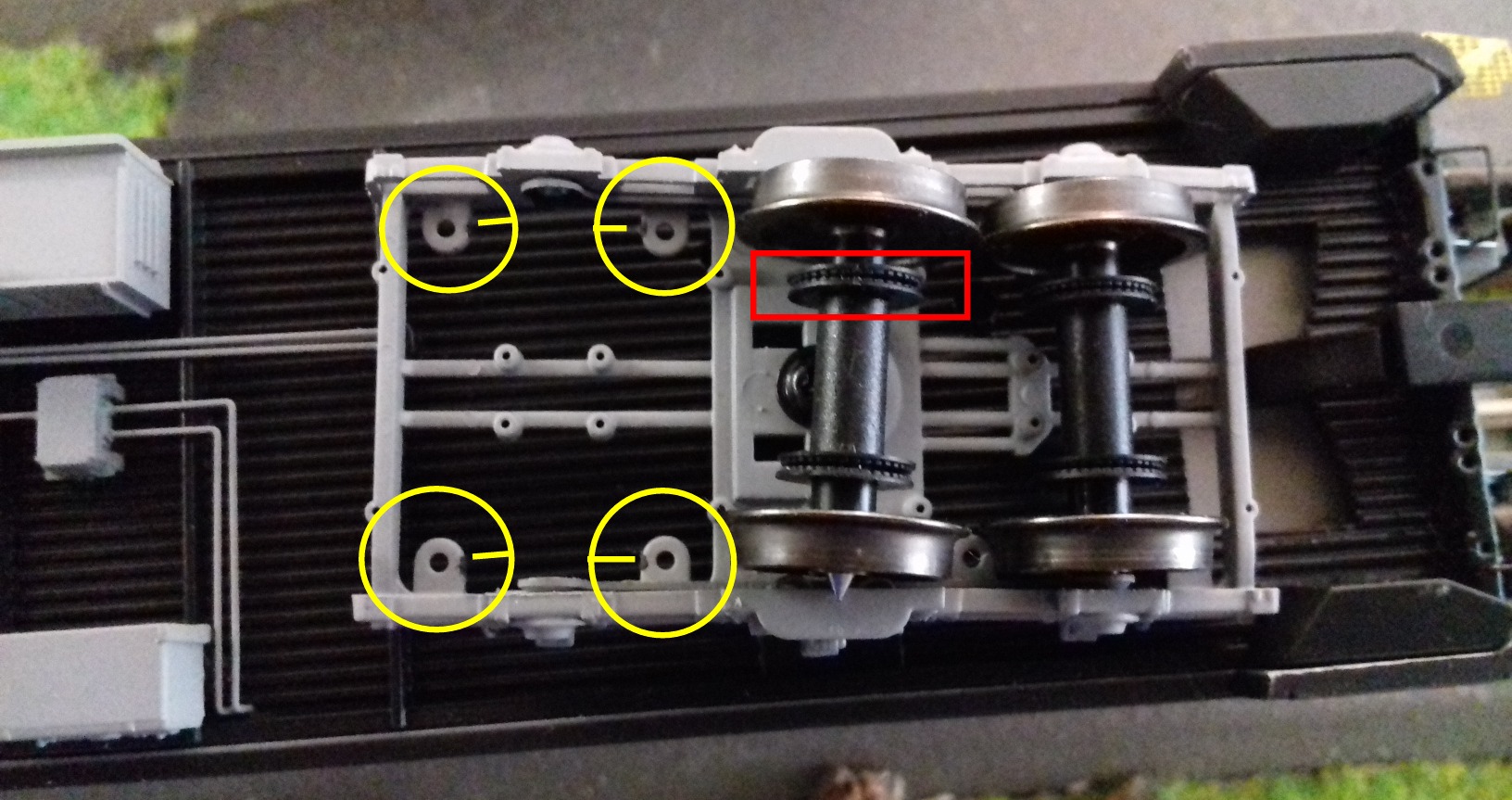
It has been noticed by many modellers that the new HNoll models are not very free-running; this has nothing to do with the brakes! If you have any of these models with this problem, turn the model upside down and you will see small ‘ears’ with holes in them on the bogies, these are in the way of the wheels. We have been advised, just cut them away, they are not supposed to be there.

HNoll carriages are slowly emerging, but at 995:- SEK, they’re going to be difficult to obtain whilst out of work! Adrian juggled his finances to buy the WL4 and WL6 models, but this month, the BC4 models appeared. Thankfully, a late birthday present (for the last three years) has taken care of them! Now, the R4/RB11/S12 models have been announced as likely to arrive February 2020. These have much more detailing on, so without surprise, these are a little more expensive, at 1195:- SEK! Restaurant cars are virtually non-existent in H0-scale for SJ! The FLMJ is only interested in the R4 (the RB11 and S12 are too modern). Only one brown one has been advertised (and is with the InterCity chevrons), so the solitary all-over red version might make a suitable ‘second’—if funds permit, of course!

The “Editions Atlas” ‘Rc3 1027’ arrived in June, and it was on display with the Scandinavian Railways Society’s stand at the GRS Model Railway Exhibition at Didcot a week later. It is a nicely detailed static model, very little to fault with it in terms of authenticity, but lots of detail needed gluing back on following delivery, especially bogie sides and steps. Curiously, to make the ribbed sides more noticeable, they have been painted with thin white lines, which are really unnecessary, but all livery details seem to be correctly applied, except that they have got their ‘A’ and ‘B’ ends confused! The pantographs are solid mouldings, so one is permanently raised (and not spring-loaded), the other permanently lowered. The bogies inside the dummy frames have that “could be retrofitted with Tenshodo Spuds” look, but the less said about that, the better! The wheels on the dummy bogies are RP25-ish, but they are easily accessed if NEM 311 wheels are preferred. Once retro-fitted with NEM 362 couplings (as well as exchanging wheels and pantographs), this will be a useful model for double-heading or push-pull trains. (Somewhere in the archives from 1994, there is a photo of an Rc-loco in the orange livery, but modified to denote radio control – maybe that is a future option for this model at the FLMJ.)

The first of the Hnoll coaches have arrived into the shops; none in SJ brown. Early impressions from a friend are positive, but that the boxes have not been designed so that the coaches can be put away with ‘close-couplings’ fitted into the NEM boxes, and some polystyrene will need cutting away! The models so far are of types BC4 (couchette coach), WL4 (sleeper coach with 1-2 beds and wash-room per compartment), and WL6 (sleeper coach with three beds per compartment). Of these only the BC4 was ever in the brown livery, the others being introduced to SJ after the new livery had been started. As 1990s coaches, their bodysides are slightly different to the 1980s design. With a lack of sleeper coaches for the FLMJ one WL4 and WL6 each in the original blue livery have arrived into FLMJ storage, but we’ll wait for the brown BC4 (of which we’d like two)!

The FLMJ closed at the end of the 2018 Summer timetable. All of the trains and buildings were put into safe storage soon after, as well as various other scenic effects, materials and tools. The home was vacated early November. Thus ended more than 25 years of Railway history. But given the circumstances leading to this, we are determined not to be beaten completely, and with suitable recovery and some help where it will be needed, the FLMJ will open again; somewhere else (and probably indoors).
There is a sad irony that the FLMJ was officially closed on the 100th anniversary of Sweden’s worst ever railway accident (at Getå, October 1st, 1918) claiming the lives of ±42 people. There had been a landslide pulling the ground out from under the railway line; and here we have a situation where the rug has been pulled out from under our feet. But on that note, it is pleasing to recall the fact that the locomotive involved in that accident (F-class number 1200) was rebuilt and returned to service, and has been preserved in full working order. There is no reason why this cannot be true for the FLMJ also.